Horse Tamer
Ebenezer Singh
November 20, 2025 - January 20, 2026.
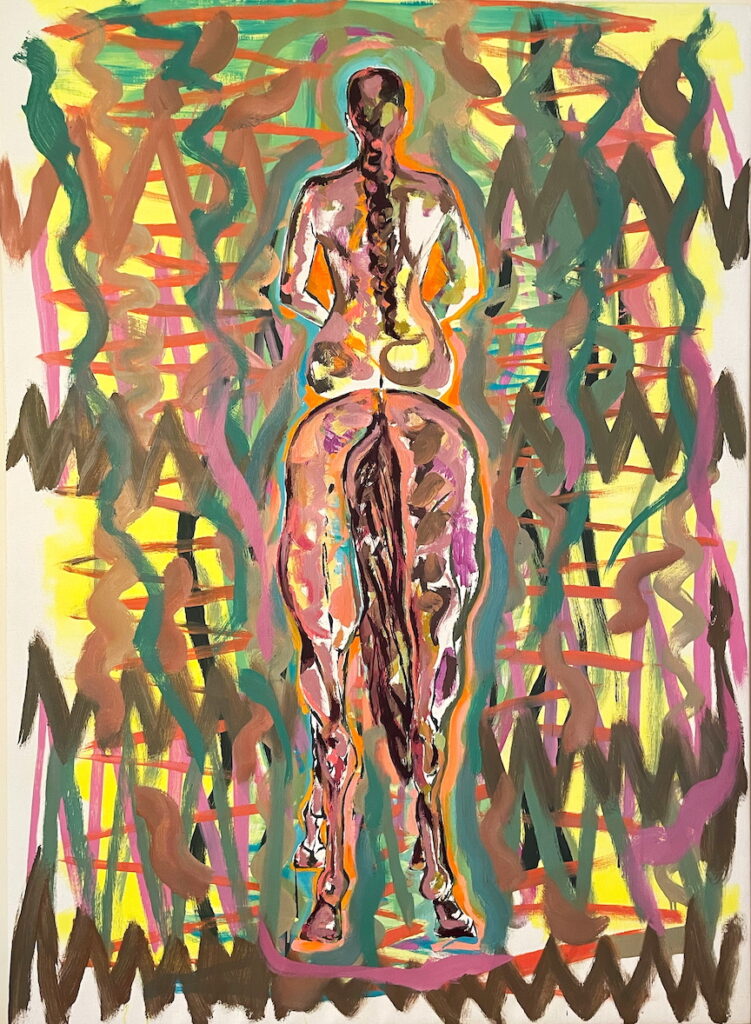
Horse Tamer, oil on linen, 66″X48″
Horse Tamer
Ebenezer Singh
Horses have been tamed since time immemorial. They were harnessed to aid human advancement: ploughing our fields, charging through battle, and building spiritual kingdoms among men by becoming carriers of our venerable, invisible divine images to the heavens.
Taming a horse is an art. To understand the heart of an animal, to build trust, and then gently reshape its nature to serve human needs is, in its way, a divine act.
There are, however, the invisible horses humans have always tamed: those that live within us. These are the man-made Trojan Horses we assemble quietly and meticulously from the moment we enter the world. Everyone around us contributes to their making. They grow with us and assume the scale of the environments we imagine for ourselves. These inner horses are emotional beings, sexual beings, and spiritual beings. Taming them is also an art, and for an artist, the art itself becomes the tool.
These inner horses sometimes stand frightened in a thunderstorm, like a horse in Eugène Delacroix’s canvases, or like the white horse that drinks from a lonely Tahitian stream in a painting by Paul Gauguin. At other times they lead the tamer through spiritual fields, as in Edvard Munch’s team of horses, or walk beside the boy within us, as in Picasso’s Boy Leading a Horse. They might appear bright and radiant like Franz Marc’s Blue Horse, or sober and restrained like Henri de Toulouse-Lautrec’s white horse Gazelle. Horses, in all their forms, remain ever-present for artists.
Ebenezer Singh’s recent series of horse paintings emerge from this tradition and from his own sensorial life. These horses are tamed by his instincts.They are spiritual discoveries, poetical symbols shaped by the textures of his everyday New York experience. His construction of these dignified creatures sometimes includes a tamer or rider. In the painting Horse Tamer, for instance, the figure leading the horse into brilliance is rendered with Singh’s characteristic sweeping brush strokes. Even through vigorous abstraction, the sense of the sublime remains intact.
Horse Neck presents an allegorical vision: a human head merging into the neck of a horse. The seated figure turns away from the viewer, its elongated form rising from the hip with a subtly phallic resonance.
Horse Tamer marks Ebenezer Singh’s third solo exhibition with the gallery. The show opens on Thursday, November 20, and runs through January 20, 2026.
Out of Hand
Ron Baron
Steven Montgomery
September 11 – November 6, 2025
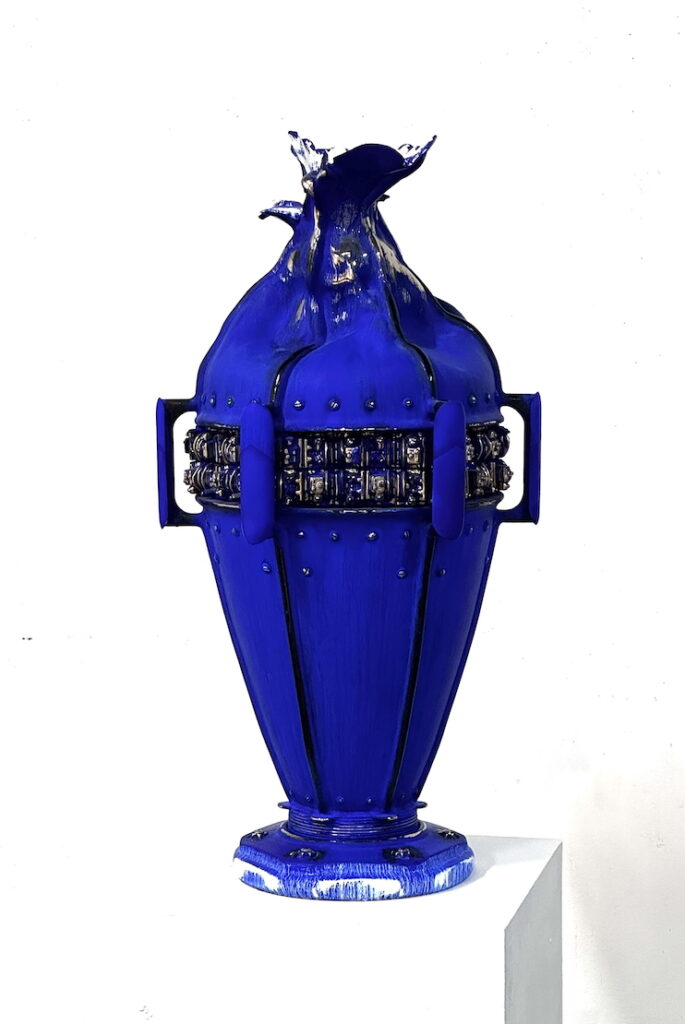
Steven Montgomery
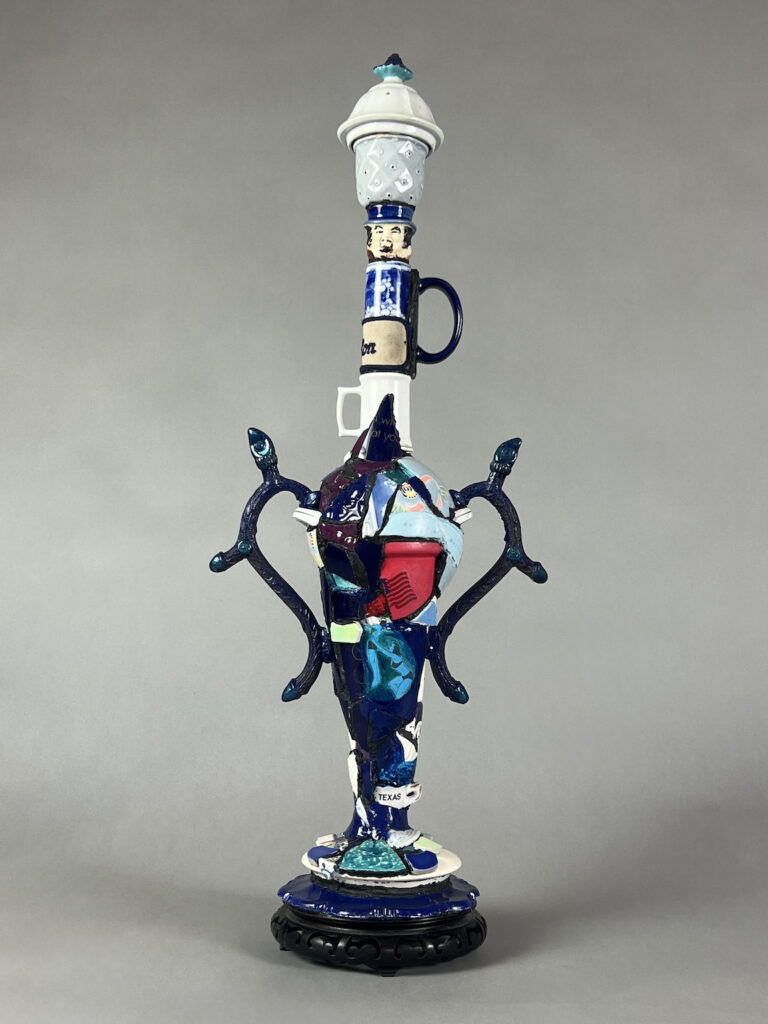
Ron Baron
Out of Hand
Ron Baron
Steven Montgomery
Rosebud Contemporary is proud to present ‘Out of Hand’, a two-person exhibition featuring new ceramic works by acclaimed New York based artists Ron Baron and Steven Montgomery. Together, these artists expand the expressive possibilities of clay, transforming the vessel into a site of history, rupture, and reinvention.
Ron Baron’s latest series, Ancient Futurism, reimagines the amphora, an ancient container of storage and storytelling, through the lens of contemporary fracture. Constructed from stacked, repurposed domestic objects and clad in shards, paint, and collage, Baron’s works rise as hybrid artifacts excavated from imagined civilizations. Guided by the “Shattered Vase Theory,” his sculptures reflect cycles of loss, trauma, destruction, and reconstruction, embodying the fragile resilience of democratic ideals and cultural identity. Over a career spanning more than three decades, Baron has exhibited nationally and internationally, received awards from the New York Foundation for the Arts, the National Endowment for the Arts, and the Pollock-Krasner Foundation, and his works are widely published and collected. Based in Brooklyn, he teaches at the School of Visual Arts, NYC.
Steven Montgomery approaches clay with a painter’s sensitivity and a sculptor’s inventiveness. Known for his distinctive surface treatments and mixed-media constructions, Montgomery merges tradition with experimentation. Using the potter’s wheel alongside steel and wood armatures, marine-grade epoxies, and innovative hanging systems, his works push ceramic form into new territories. With roots in both ceramics and printmaking, Montgomery embraces the tactile energy of paint and the structural depth of sculpture. His works are held in major collections including the Metropolitan Museum of Art (NY), Smithsonian American Art Museum (DC), and the National Museum of Sweden. He has exhibited internationally and received prestigious fellowships from the New York Foundation for the Arts, the Pollock-Krasner Foundation, and the Smithsonian Artist Research Fellowship. He lives and works in New York and teaches at Hunter College.
Together, Baron and Montgomery present vessels that are both objects of survival and visions of possibility. ‘Out of Hand’ showcases works that hold the past and future in tension, at once archaeological and contemporary, broken and remade, grounded in tradition yet defiantly new.
The show opens on Thursday, September 11, and will run through November 6, 2025.
Poetic Discourse
Summer Show
June 26 – August 1
Stan Narten, Ebenezer Singh, RJ Calabrese, Claire HarnEnz, Larry Greenberg
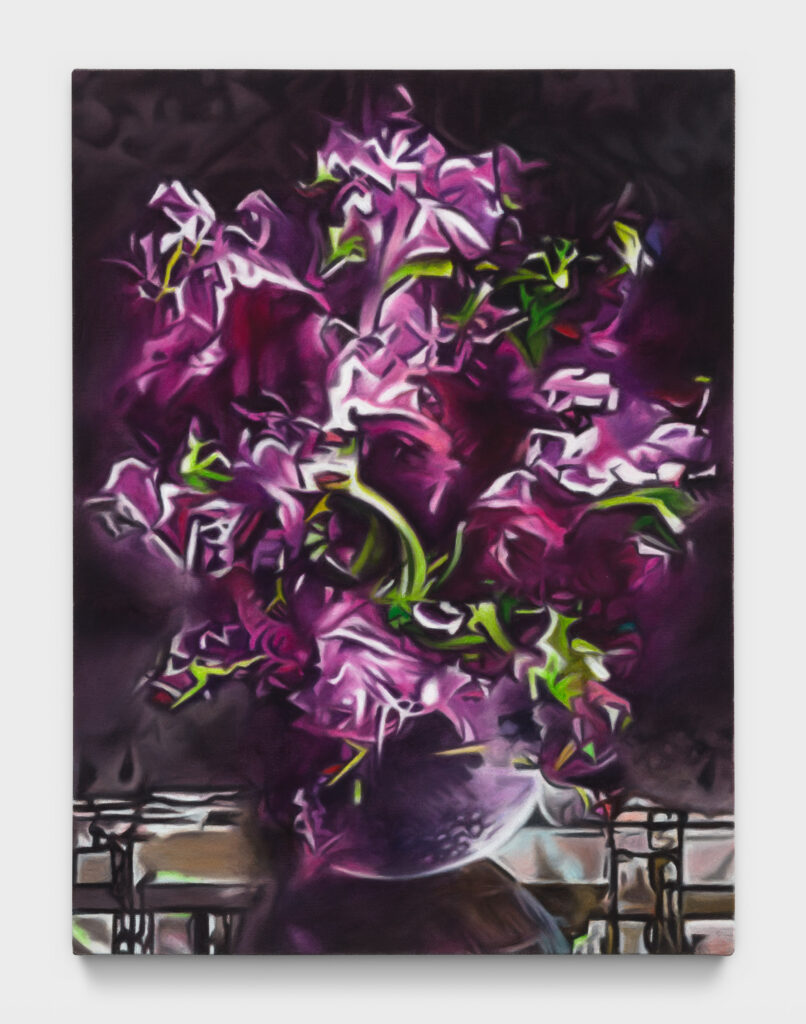
12" x 10"
Poetic Discourse
Summer Show
Stan Narten, Ebenezer Singh, RJ Calabrese, Claire HarnEnz, Larry Greenberg
Poetic Discourse is a summer group exhibition featuring five artists—Stan Narten, Ebenezer Singh, RJ Calabrese, Claire HarnEnz, and Larry Greenberg—who primarily work in painting and share a poetic sensibility in their approach to artmaking.
The term “poetic discourse” refers to a mode of communication that emphasizes expressive, imaginative use of language, rich with imagery, metaphor, and rhythm to evoke emotion and convey meaning. Each of the artists in this exhibition channels this ethos through their visual language, drawing from personal experiences, visual references, and the everyday rituals of their artistic practice to create works that are both contemplative and emotionally resonant.
Stan Narten’s recent still-life paintings of flowers grow organically out of his previous series of distorted interior scenes. His vividly rendered potted blooms carry a color-driven rhythm that echoes the ordered chaos of nature itself.
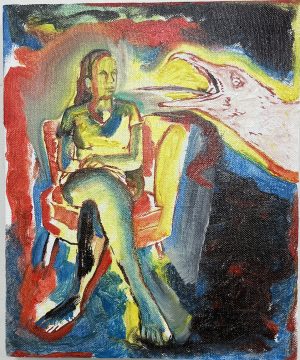
Ebenezer Singh’s psychologically charged compositions feature birds and animals that often stand in for aspects of his extended poetic self. Bright hues and bold brushwork heighten the theatrical quality of his canvases, imbuing them with narrative and emotion.
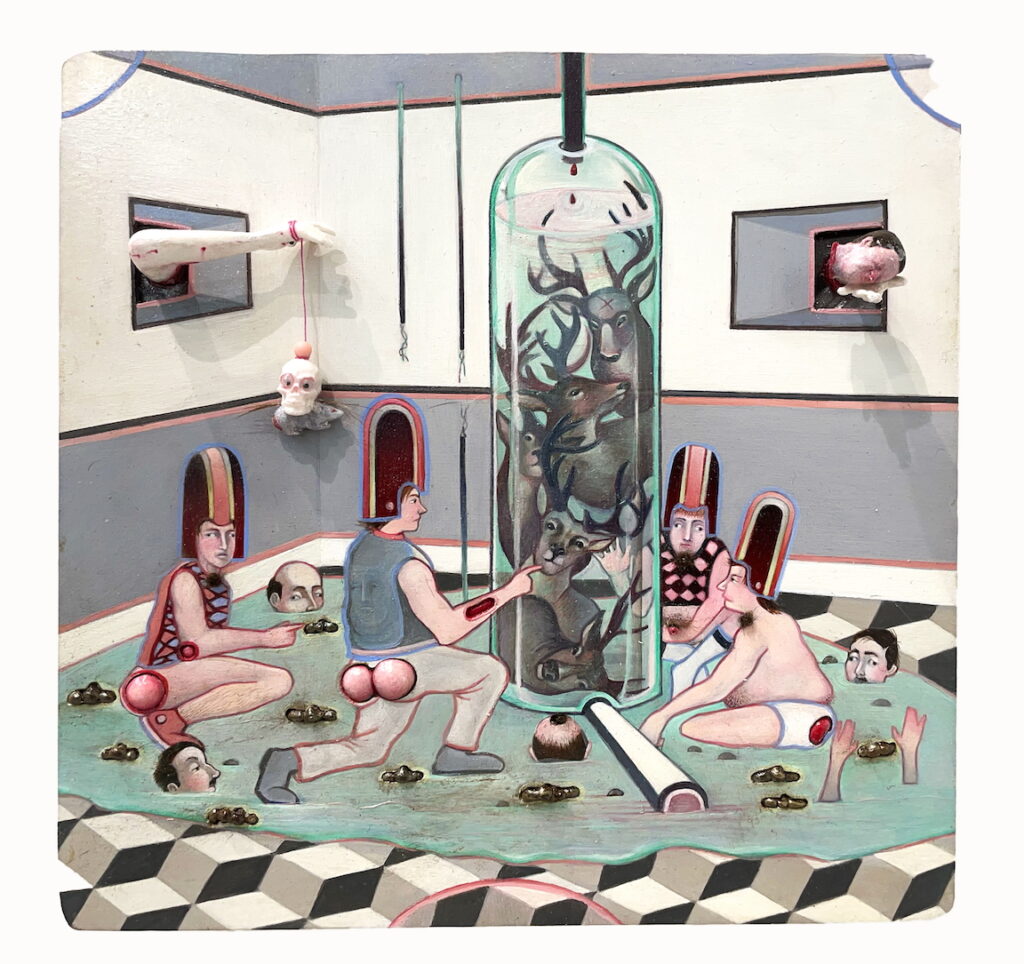
RJ Calabrese’s mixed media works are surreal poems in themselves—populated by figures caught in uncanny, otherworldly scenarios. His imagery builds momentum through dreamlike juxtapositions, conjuring stories that hover just beyond reach.
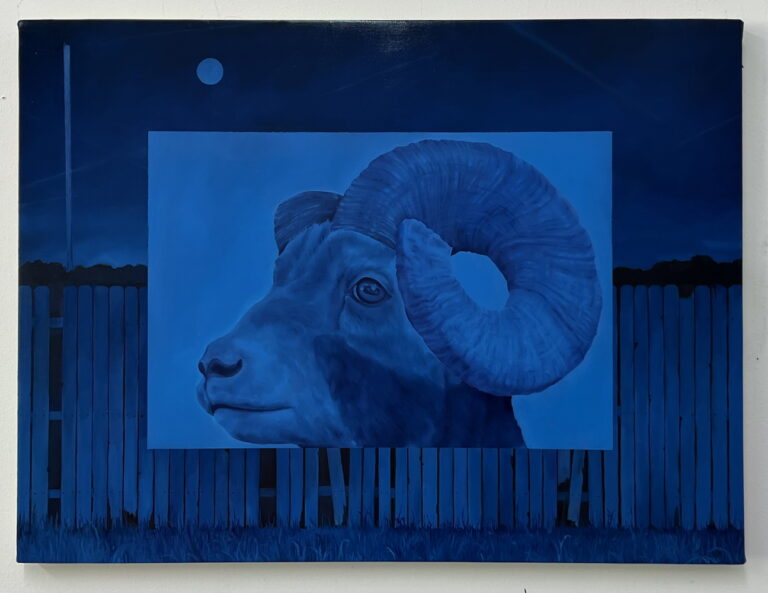
Claire HarnEnz constructs animal imagery—particularly horses and rams—using a restrained, monochromatic palette. Her subjects inhabit sparse, architectonic spaces, where unexpected combinations of natural and manmade elements suggest a quietly poetic logic.
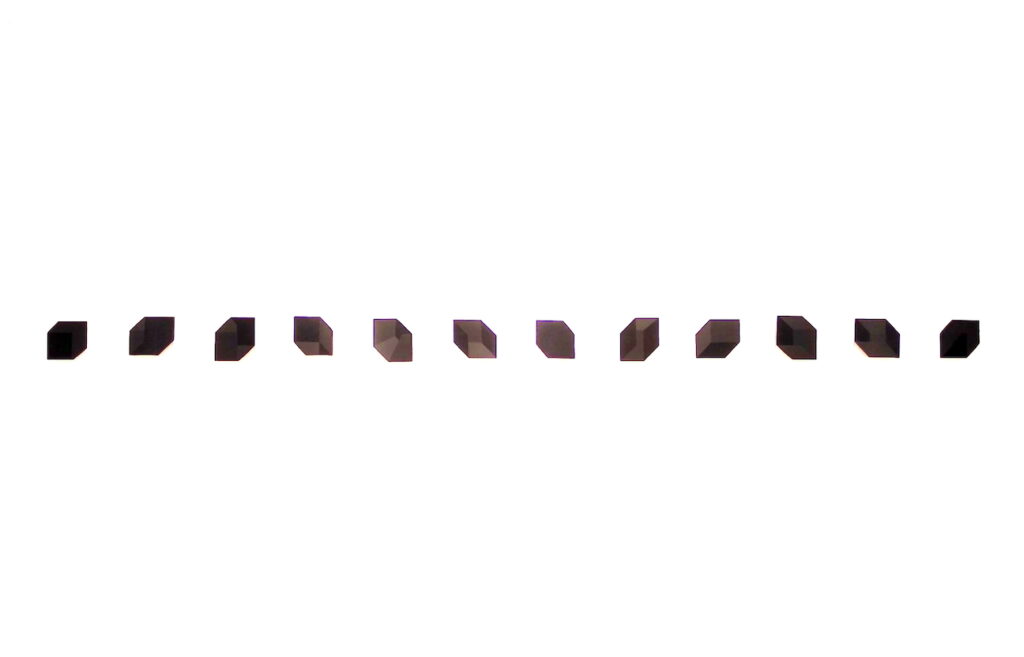
Larry Greenberg’s recent series of modular, painted wooden forms explores geometry as a lyrical language. Working in tones of black and gray, his compositions become meditations in shape and shade—quiet, deliberate, and deeply personal.
Together, the artists in Poetic Discourse reflect on the emotional and imaginative possibilities of visual art as a poetic practice.
The show opens on Thursday, June 26, and will run through August 1, 2025.
En Route
April 10 – May 8
Rifka Milder
Meg Hitchcock
Ketta Ioannidou
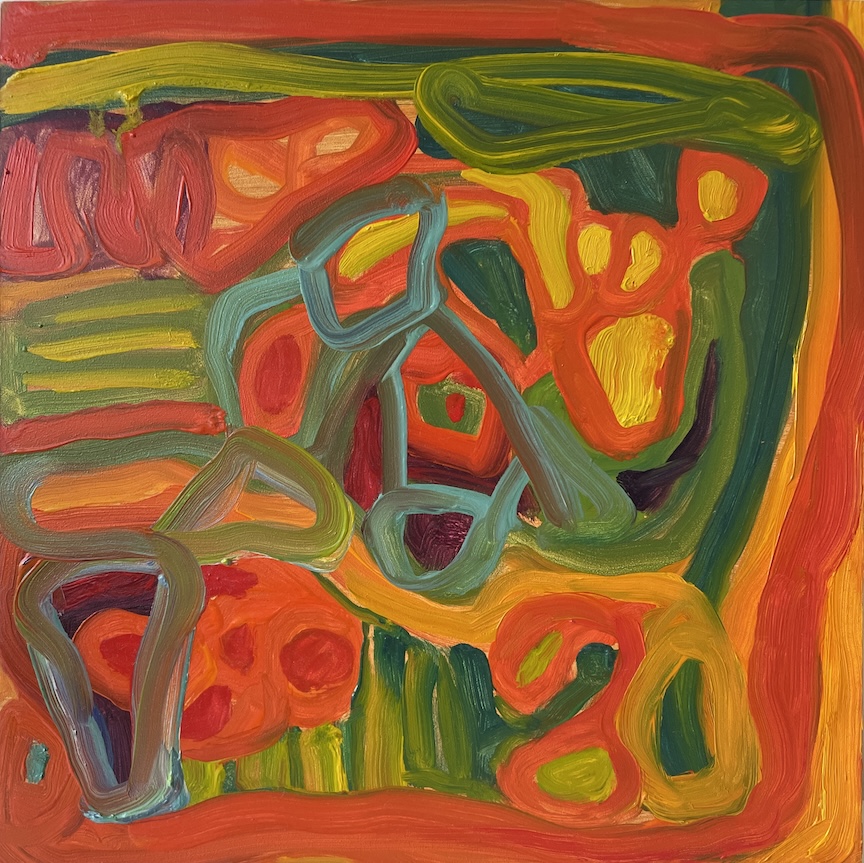
Oil on Panel, 10" x 10"
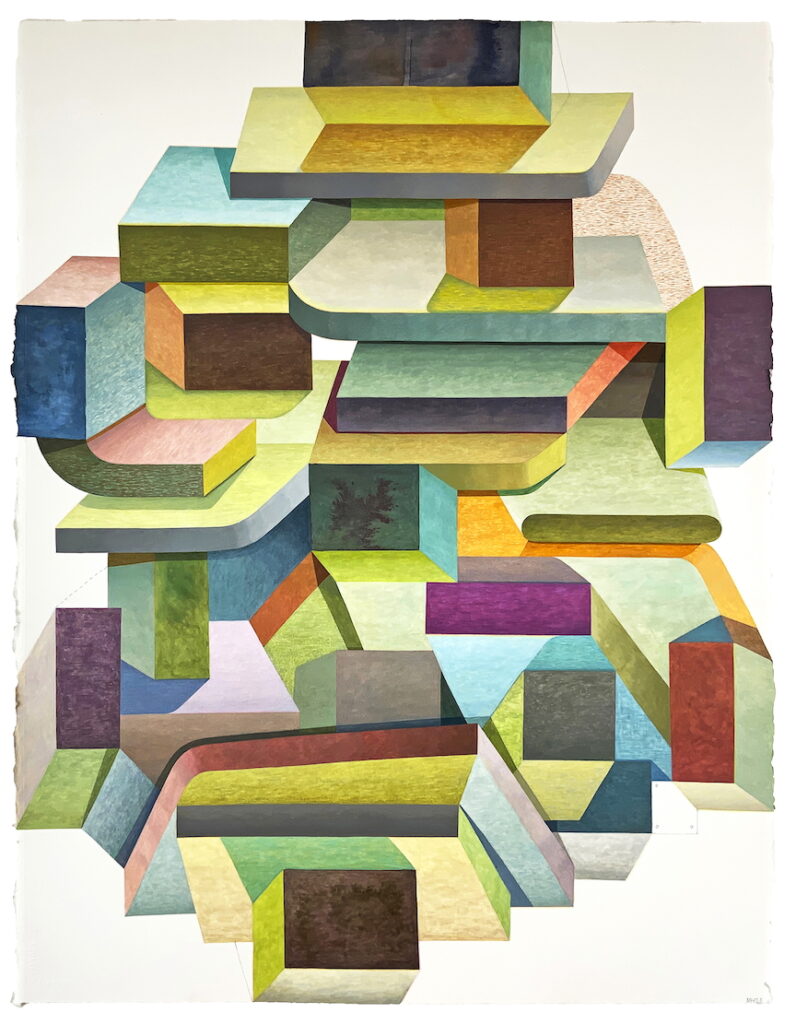
Acrylic & Graphite on Paper, 30" x 22"
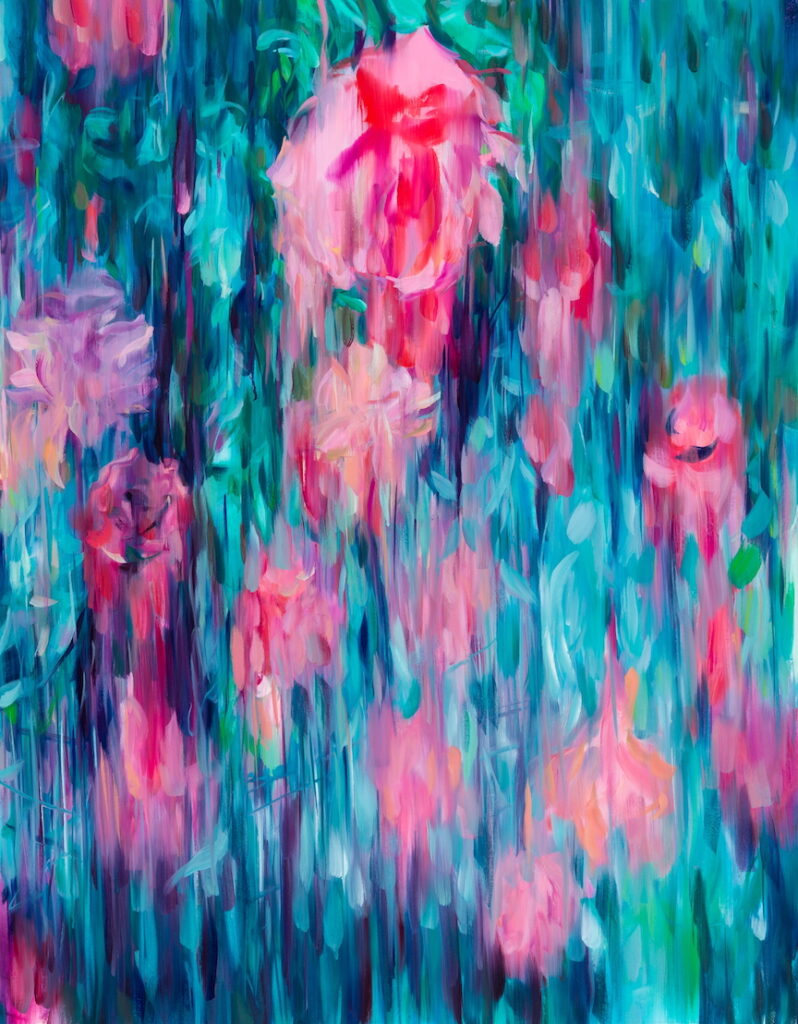
Oil on Canvas, 43" x 34"
En Route – Three Women Artists: Rifka Milder, Meg Hitchcock, Ketta Ioannidou
Abstraction is almost always en route—a journey toward a plastic intellection on canvas or paper. For the brilliant Josef Albers, a simple geometric shape like a square was closer to nature than nature’s visual appearance itself. His path to abstraction was one of perpetual transition; hence, he created a series of brilliant squares within squares—yet he was never finished. For Barnett Newman, abstraction was about bridging internal and external spaces. For Mark Rothko, it was a means of channeling anxieties and struggles through emotional renditions. Joan Mitchell infused her work with synesthetic reverberations, while Lee Krasner created a coalescence of psychological algorithms and nature itself.
Artists Rifka Milder, Meg Hitchcock, and Ketta Ioannidou each navigate their own paths within abstraction, discovering unique visual vocabularies along the way. Rifka harnesses bold brushstrokes and warm colors to articulate her experiences with nature. Meg Hitchcock densely populates her surfaces with solid, beam-like abstract patterns, reimagining the sacred within the human psyche. Ketta Ioannidou finds poetry in nature, internalizing its essence before translating it onto the canvas in a poetic order.
En Route is a vibrant group exhibition featuring three women artists who have lived and breathed abstract art throughout their New York lives. In a city where abstract languages span from Jackson Pollock to Sam Gilliam, from Helen Frankenthaler to Julie Mehretu, the challenge of finding one’s own voice amidst this dynamic artistic milieu is both daunting and exhilarating.
Rifka Milder’s artistic practice is a form of self-healing. Through heavy, gestural brushstrokes, she constructs color bodies, fully immersing herself in the process while pushing the limits of her dexterity. Her work boldly experiments with color motifs, drawing from two seemingly opposing sources: the luminous palettes of Pierre Bonnard and the intricate vibrancy of Persian miniatures. Though her destinations remain elusive, her paintings strike with an undeniable intensity.
Meg Hitchcock explores the poetry of the divine through her acrylic works on paper. How does one translate sacred script into a purely visual form? What happens when a verse from the Bhagavad Gita is painted without its linguistic or figurative meaning? Hitchcock’s paintings engage with such inquiries, offering abstract visual analogies of profound spiritual principles. Works like ‘You Are the Vanishing Point’ and The Recognition and Dissolution of Mental Constructs transform language into something pictorially abstract, distilling meaning beyond words.
Ketta Ioannidou, though based in Brooklyn, continuously carries Nicosia, Cyprus, in her paintings. Her Mediterranean heritage surfaces through recurring memories of landscapes, which she categorizes into imagery within her studio. Her archetypal memories remain tethered to the land, water, and sky of her childhood. Like Citizen Kane’s enigmatic ‘Rosebud,’ Ioannidou’s flowers dissolve onto the canvas, their petals transformed into paint smears. Her paintings serve as bridges to the past, impervious visual testaments to memory and place.
The three artists, each en route through abstraction, drift toward uncharted visions, fluid interpretations, and the ever-shifting essence of expression.
-Ebenezer Singh
THRESHOLD
Stan Narten
January 16 - April 4, 2025
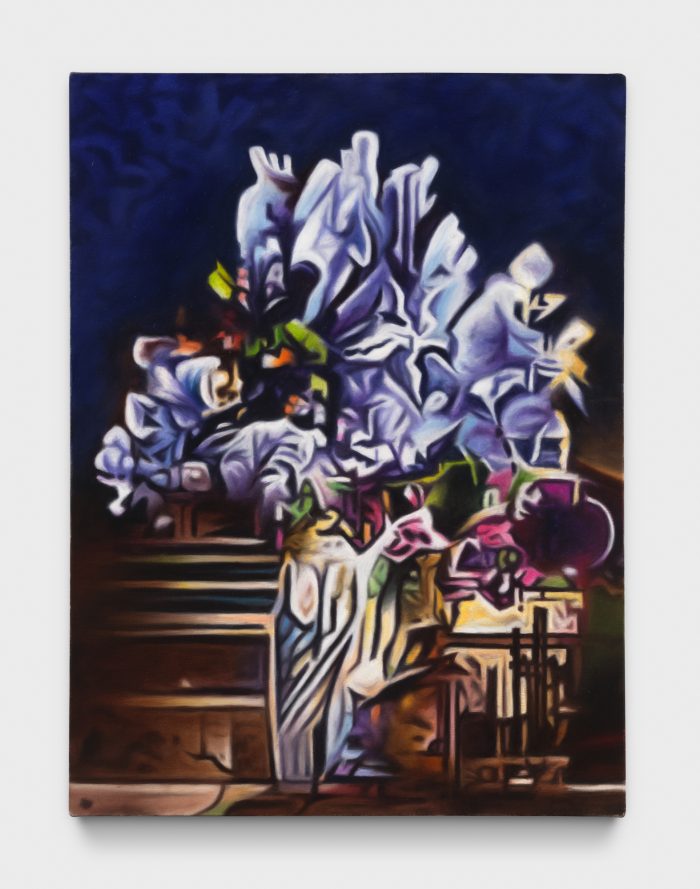
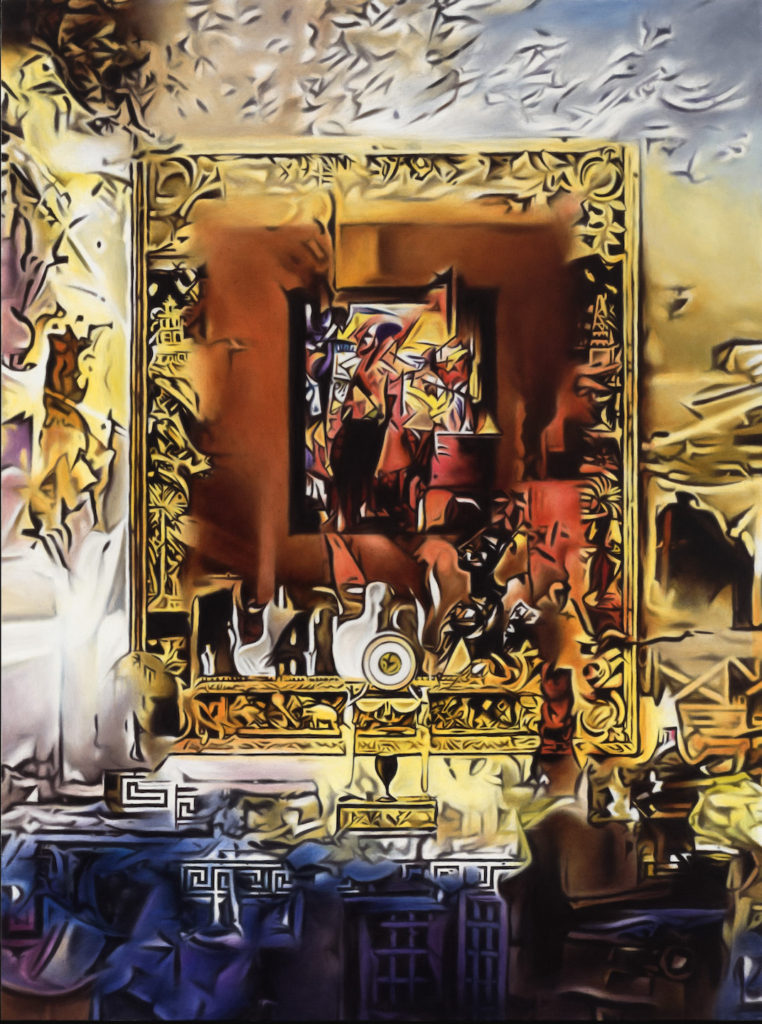
Peachy Keen (2025)
Oil on Linen 12 x 9 inches / 30 x 23 cm
Threshold
Stan Narten collects images from a variety of references across a wide range of cultural touchpoints: popular culture, classical painting, ruins photography, obscure album art, fantasy illustration. In his recent work he turns his gaze on interior design, those heavily staged magazine tableaus where the wealthy show off their exquisite taste in design, architecture, and art.
Like a modern-day Kunstammer, these rooms offer a rich starting point. They combine contemporary artwork, vintage furniture, stacks of books, flower arrangements, strangely patterned rugs, oddball chandeliers, and other disparate visual forms, ready and waiting to be transformed and intertwined, scrambled and rebuilt into psychedelic, post-apocalyptic compositions.
The wealthy have always used monumental expenditures—palaces, pyramids, the patronage and collecting of art—as bids toward immortality and as talismans to ward off death. Each featured home in Architectural Digest reflects its own tragic Ozymandias. But ever-encroaching entropy eventually brings chaos and decay to even the most tastefully planned and lavish collections.
Narten conjures up the entropy that has been hidden from sight in these carefully composed chambers. The source imagery is digitally digested, purged, then built back as if from its own crumbled pieces. It’s a process that involves cutting up images, layering them in multiples, filtering and manipulating in Photoshop, then reinterpreting the composition by hand in oils. Interlaced with disparate elements from various sources, from urban decay to classical still life, the painting becomes a completely new and mysterious collage of familiar forms, never quite congealing into a stable image.
The resulting work offers no clear-cut commentary on any particular theme, but an exploration of the means by which meaning is created through perception. It calls attention to that undecided moment before form and meaning cohere, the instant before subconscious biases, language, and memory defines the space we perceive around us.
The act of cutting up and putting back again is particularly suited for encouraging the perceiving human agent to fill in the gaps of meaning. The cut-up technique has a long tradition of uncovering hidden true, hidden meaning; like many games of chance, it is considered a form of divination. “When you cut into the present,” William S. Burroughs, one of its champions, said, “the future leaks out.”
On canvas, this leaked future appears as chaos and flames, or harmony and flowers, a dropped mask, slips in the seams of reality, or even, as software increasingly eats the world, a glitch in the matrix. Organic material decays; digital material glitches. A corrupted file may appear to be a mishap, but entropy breaks everything down.
Until that moment of perception within the human mind, images and the space around us remain—like Schrödinger’s cat—unresolved, fragments of light caught in the moment of meaning being formed out of a shapeless mass of photons. As technology’s inevitable decay infects and corrupts our reality with its own machine-generated false mirror, that moment of human perception Narten captures becomes a defiant act against the machines’ nightmare dystopian future.
-Stephen Hoban 2025
Talk to the Horse
Ebenezer Singh
October 10 - November 16, 2024
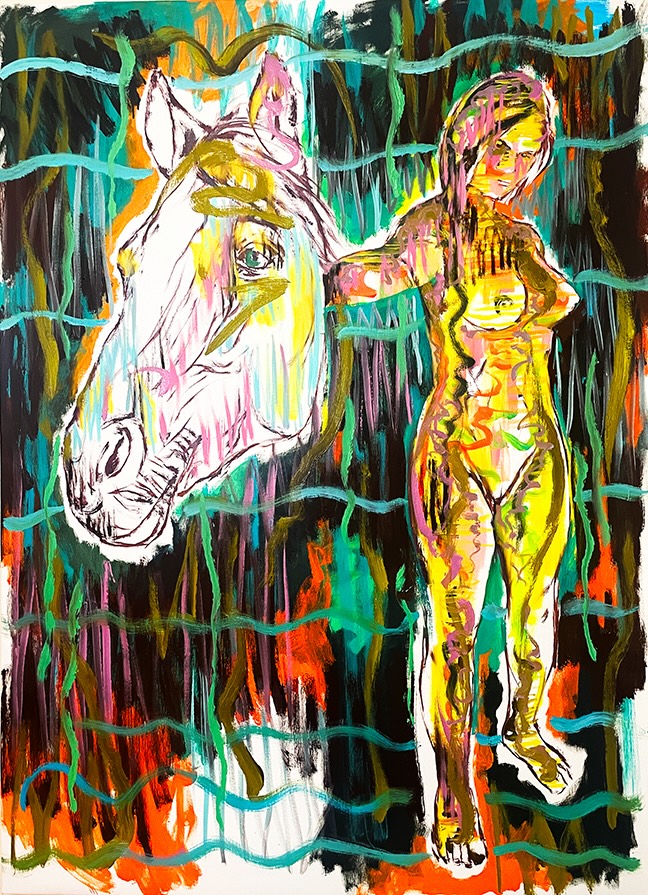
Talk to the Horse, oil on linen
66″X 48″
Talk to the Horse
“Talk to the Horse” marks Ebenezer Singh’s second solo exhibition with the gallery. Once again, Ebenezer delves deeply into his favorite subject—horses—placing them in highly psycho-dramatic settings. Political undertones are evident in these new works, moving between subjective and objective perspectives through a series of rapid, expressive brushstrokes. Ebenezer captures emotion across the canvas, creating powerful narratives.
In ‘Horses Grow on Apple Trees’, the artist directly addresses the violent political struggles between nations, with a specific focus on the ongoing unrest in Gaza. The piece conveys the unsettled state of people displaced from their homes. Meanwhile, the titular work, ‘Talk to the Horse’, invites a dialogue between aggressors and the aggrieved, underscoring the need for communication in times of conflict.
Horses, as enigmatic creatures, are particularly vulnerable to human intervention. Ebenezer’s “interventions” take the form of symbolic representations of horses, rooted in his personal and social struggles. These symbols serve as subtle channels for conversation. In ‘American Gothic’, the horse embodies both captivity and grace, while in ‘Bucephalus 2’, it is led and guided, representing complex dynamics of control and influence.
The exhibition also features three of Ebenezer’s recent watercolor works, which serve as both preliminary studies for his larger oil paintings and standalone pieces.
Timely, Timeless
RJ Calabrese
June 27 - July 31, 2024
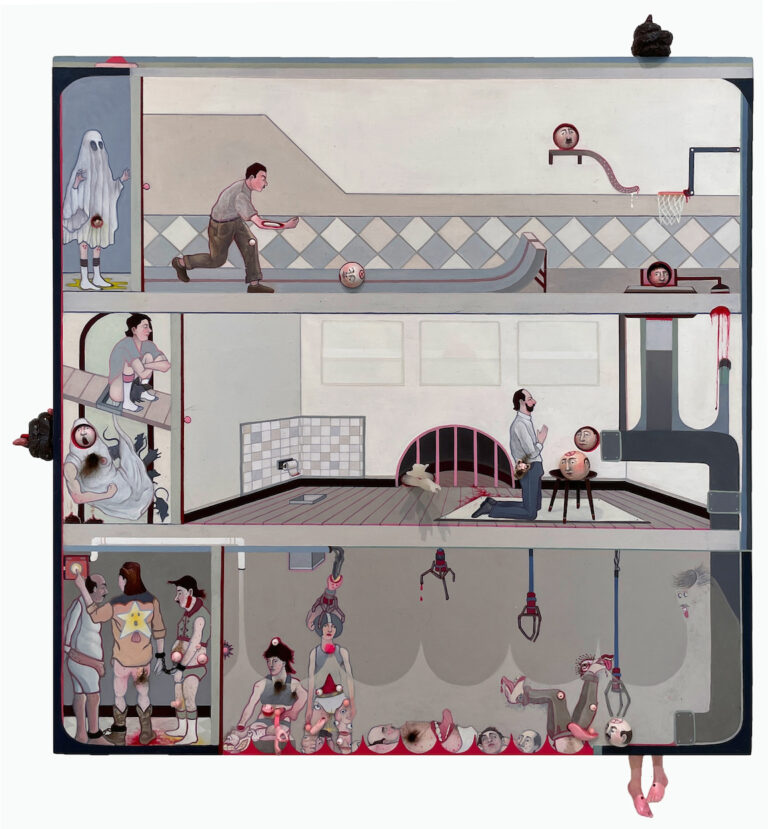
Bunker Room 3- Game Rooms, water soluble oil, polymer clay, moldable plastic silicone on wood,
18”X 18” X 2”
Timely, Timeless is RJ Calabrese’s debut solo show with Rosebud contemporary, NY.
Timeless, no: no more than our own time. Timely, however, yes. We live in a world as senseless as that portrayed by RJ Calabrese, as violent and as perverse. The difference is we imagine our own world is governed by reason, not whim. We ascribe the cruelty of our world to wickedness which we think is an exception, not seated in the very diaper of God, where it is the center of gravity for all being.
In Calabrese’s world nonsensical grotesque violence is unabashedly the rule, and perhaps that is why for all its outlandish and elegant monstrosity it seems so familiar. Underneath it all we know violence, domination and cruelty are banal and common, even if we pretend, they are an aberration from some imagined ideal essence just beyond reach, to which we shall return. But alas, as Calabrese shows us, our fate is not grace, but gross, and our end comes not with a bang but with a whimper.
– Andrew Paul Keiper
Sandpaper beards and the grotesque – RJ Calabrese and his anatomy of the absurd
RJ plays with the absurd the way children play in the sandbox – with abandon, verve, and astonishing focus. His mixed media works, on display at Rosebud Contemporary in an exhibition titled ‘Timely, Timeless’, test the biological absurdity of our bodies, coating them in shades of humor and oblique eroticism. The images first magnetize, then utterly arrest the viewer with warring sensibilities: why can’t I look away from something so attractive, yet so strange? RJ’s art does not shy away from the grotesque, from the real. Images of dismembered bodies writhe behind stately architecture. Fantastical humans with hairy legs and doom in their eyes rise above a natural landscape bleached of the very life spilling from the guts of its human overlords. RJ’s engrossing work posits a strange but simple belief, almost childlike in its intensity: you can’t look away from something so strange, yet so attractive.
For the academically inclined viewer, RJ’s characters seem to traipse off the pages of a picaresque novel, right onto his panels. The picaresque figure is necessarily a country anti-hero, whose response to an unstable, degenerating world is a sense of “misery, degradation and powerlessness”, in the words of academic Javier Herrero. Perhaps, we think, humanity is a scrappy, playful thing, selfish and unchanging, capable of emerging unscathed from the foibles of society. It is tempting to cast RJ’s works in this light, but he offers a more complex etiology for his images. His visual influence partly derives from 16th century grotesquerie, which Renaissance art historian and painter Vasari once described as “a kind of free and humorous picture produced by the ancients for decoration of vacant spaces… grotesque pictures [made] outside of any rule, attaching the finest thread to a weight that it cannot support, to a horse legs of leaves, to a man the legs of a crane, and similar follies and nonsense without end.”
Why, then, is RJ concerned with such anatomical follies? Why bring these hybrid, ornamental grotesqueries, created to exist on the fringes of more socially stalwart images, and make them the center of attention? The first reason is that of play. Take, for instance, the marbled heads found in the works ‘Procession’ or ‘Bunker Room 2’. Punctuating the lines of wood bunkers, pools, and landscapes, are heads. Delightfully round and shiny, they look like miniature planets arrested in orbit, obviously separated from their larger anatomy. They double as bowling balls, furniture, passengers strapped to the backs of unearthly animals. RJ’s little heads of state command the viewer’s attention, tempting and tactile. If Lewis Carroll had some polymer clay, human hair and a block of wood, even he couldn’t dream up the absurd, delicious humor of these rolling heads.
Another recurring feature of RJ’s playful image-making is the rodent. Despite its size, the rodent connotes any number of nefarious, degenerative dooms. It splatters blood wherever it walks, clings between legs, courts the attention of its human overlords with threatening, insistent humor. Similarly divested of its head or its torso, RJ’s pests erupt out of eyes and mouths. One even roosts on a windvane like some urban harbinger of death and rot, clothed in, of all things, underwear. For the viewer, who may have freshly escaped the subterranean madhouse that is the New York rat’s primary residence, RJ’s rodents offer a resonant, humorous irony that only heightens our overall experience of his work.
Thus, we discover the second reason for RJ Calabrese’s centering of the absurd: his preoccupation with sensation. Despite the apparent urban accoutrement, RJ’s rodent-infested underground mazes have a far more ironic origin. As a current resident of the Jersey countryside, the artist says he is engaging in “strategies of contradiction”, imagining great hysterias and disastrous fallouts emerging from the quiet, broad-leafed verdure of his country residence. Yet despite such imagined calamities, he notes that his most formative relationship with sensation comes from a 1940s interactive children’s book titled ‘Pat the Bunny’, by Dorothy Kunhardt. Designed to teach children how to experience sensation (a fascinating feat in itself – are we taught to sense the world, or is it an innate proclivity?), one page instructs children to feel ‘daddy’s scratchy face’, and rub the sandpaper beard cut into a cartoon father’s chin. It is an odd, mad way to make sensation and image fit together. And of course, it is this very irony of artifice and humanity coexisting so unharmoniously that has tickled the artist.
We are creatures of contradicting sensations negotiating a mad world, these works seem to say. In the end, the artist must center the one figure that is most absurd, and languishes most in sensation: man. RJ’s male figures are diffident, morose things. Their world is a dystopian superstructure they had no part in creating. Their surrounding wildlife includes rats and sabertoothed pests; human hair, RJ’s persistent symbol of the absurd in these panels, erupts from their sternums. Despite it all, these characters accommodate their surroundings with something like stunned nonchalance. Their eyes are off set, their attitudes irresponsible, almost apathetic to the instability surrounding them. Yet their moody acceptance of the odd world they find themselves may help us embrace the absurdity of our own environs.
In his description of the grotesquerie, that revival of antiquity and playful image-making, Vasari notes that such works “[contain] monsters deformed by a freak of nature or by the whim and fancy of the workers… He whose imagination ran the most oddly, was held to be the most able.” By the great man’s definition, the whimsies of RJ Calabrese suggest a mind most able, a hand most original. “It is the merging of disparate things,” RJ says, the marriage of “three-dimensional elements that are not harmonious with the picture plane” that generates sensation, hooks us to the image. Excitingly, it also generates a tremendous tactile craving in the viewer (a message on the gallery wall reminds viewers to restrain this desire). We are back in the sandbox, playing and feeling. Dad with his sandpaper beard stands by, warding off this mad world for only so long.
– Karen E 2024
Tone
LARRY GREENBERG
May 16 - June 20, 2024
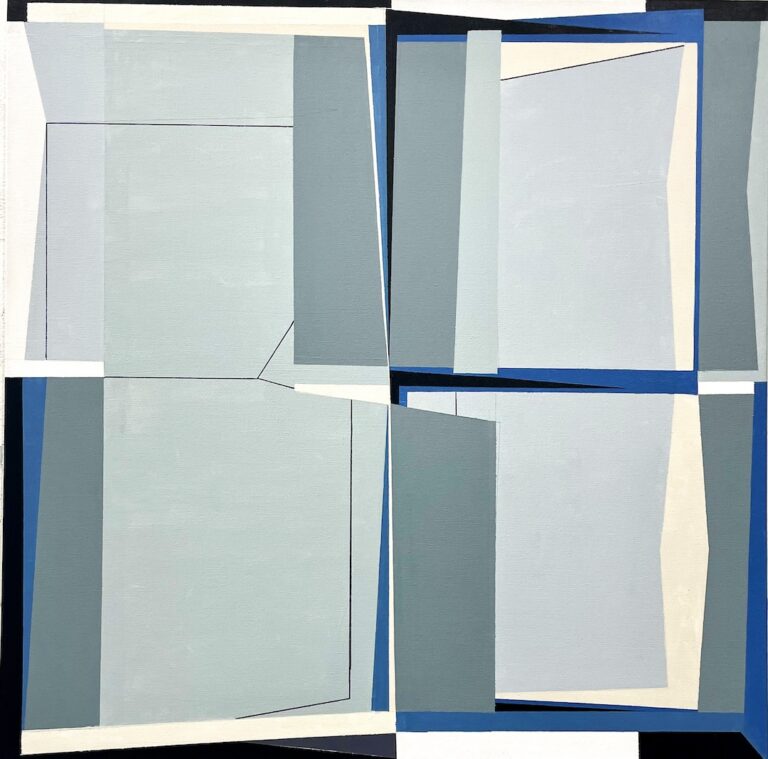
Collapsing grid, 36” X 36” acrylic on canvas
“Tone” is a word with multiple meanings. To Larry Greenberg, tone becomes the personal mode of operation. Working with muted colors, Greenberg explores compositional openings that create visual/spatial ambiguities. Greenberg’s paintings are abstract and intuitive. Close-valued hues in rectilinear geometries become luminous inventions. He uses color interactions and fresco-like surfaces to create mystical works.
Greenberg’s work emerges from his lifelong dedication to rigorous artistic inquiry, one that he shares with pre-renaissance painters, modern masters, and the postmodern mind. Thus, he works in his Brooklyn studio, a place that lets him ponder in solitude, allowing him to bring forth these poetic abstractions.
Vision of the Invisible
An Exhibition of Drawings
February 22 –April 25, 2024
Don Doe, Chandru G, Chris Bors, Nitin Mukul, Stan Narten, Natesh M, RJ Calabrese, Ebenezer Singh
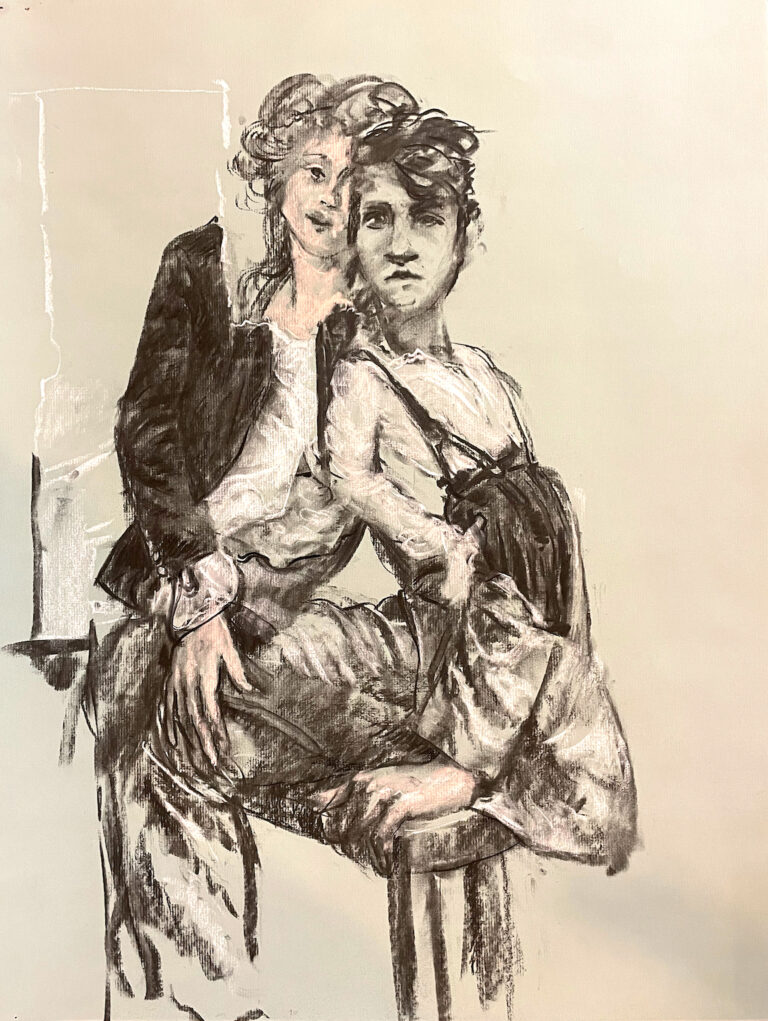
Don Doe, Triadic Harmony, 25″ x19″, Charcoal & pastel, 2023
Rosebud Contemporary is proud to present Vision of the Invisible, an exhibition of drawings by eight artists, Don Doe, Chandru G, Chris Bors, Nitin Mukul, Stan Narten, Natesh M, RJ Calabrese, and Ebenezer Singh, opening on February 22, 2024, at their Chelsea location: 526 W 26th St #606 New York, NY. Each artist has contributed three of their most visionary drawings towards the show. A drawing is a vision, a memory, a sign, a scribble, an instantaneous reaction using a simple tool on any available surface. Drawings are inscriptions, visible signs of the invisible. A drawing is a ‘no-drama’ acted out in person. While a painting may be an activity initiated by a milieu or a societal structure, a drawing dawns from within the artist, only to be realized using simple tools. One of Joseph Beuys’s pencil drawings opens a world of inquiries, and one of Willem de Kooning’s drawings can be erased entirely by Robert Rauschenberg and still be a ‘no-drawing’ drawing.
Drawing has even been a tool for poets and composers. From William Blake to Kahlil Gibran, Arnold Schoenberg to John Cage, drawings take on intricate meanings in the minds of these creative practitioners of other mediums. Rosebud Contemporary, in its pursuit of digging deep into the minds of our contemporary artists, is re-establishing the fact that the drawings do matter. They matter not because they can become a painting in an artist’s studio, but also because they exist on their own as the artist’s immediate vision.
Jacques Derrida, from whose words the title of the exhibition ‘Vision of the Invisible’ is derived, speaks of one of the Rembrandt’s drawings in his work ‘Memoirs of the Blind, The Self-Portrait, and Other Ruins’: ‘The memory of the event must be inscribed. The debt must be repaid with words on parchment, which is to say, with visible signs of the invisible…. What guides the graphic point, the quill, pencil, or scalpel is the respectful observance of a commandment, the acknowledgement before knowledge, the gratitude of the receiving before seeing, the blessing before the knowing’.
HORSEPLAY
October 12 - December 22, 2023
EBENEZER SINGH
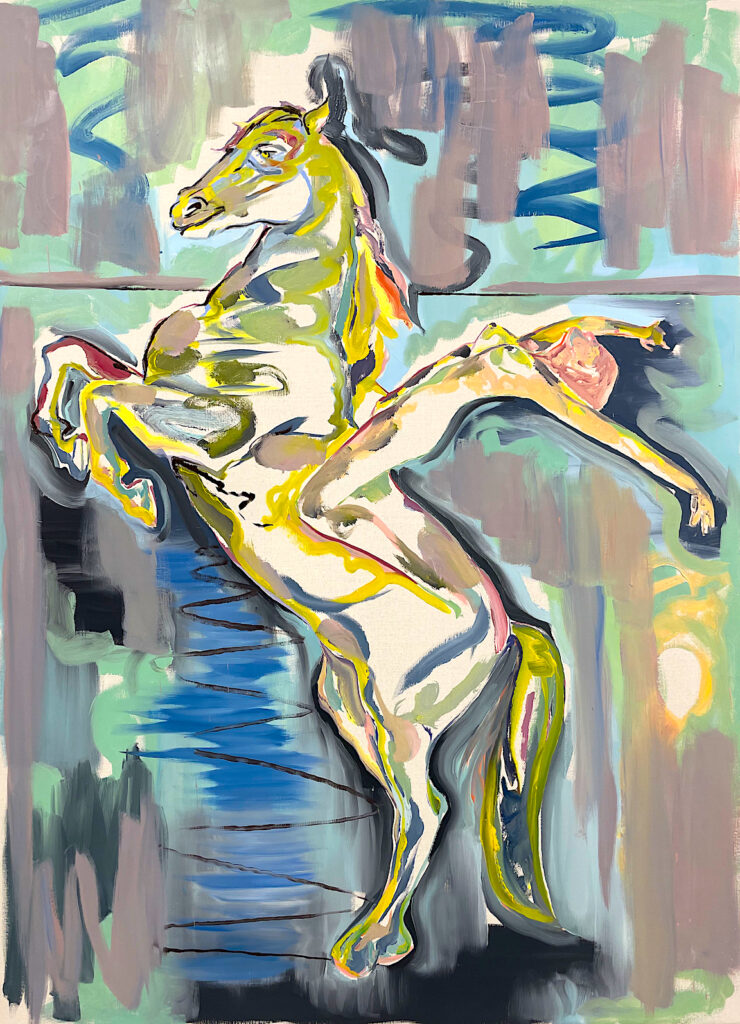
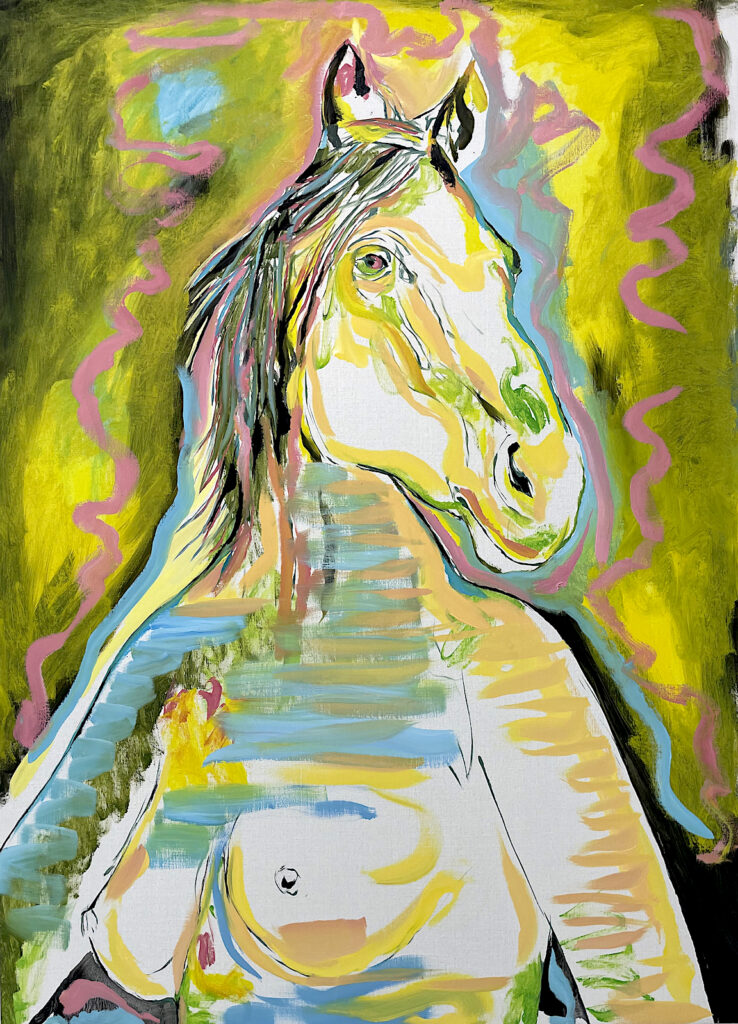
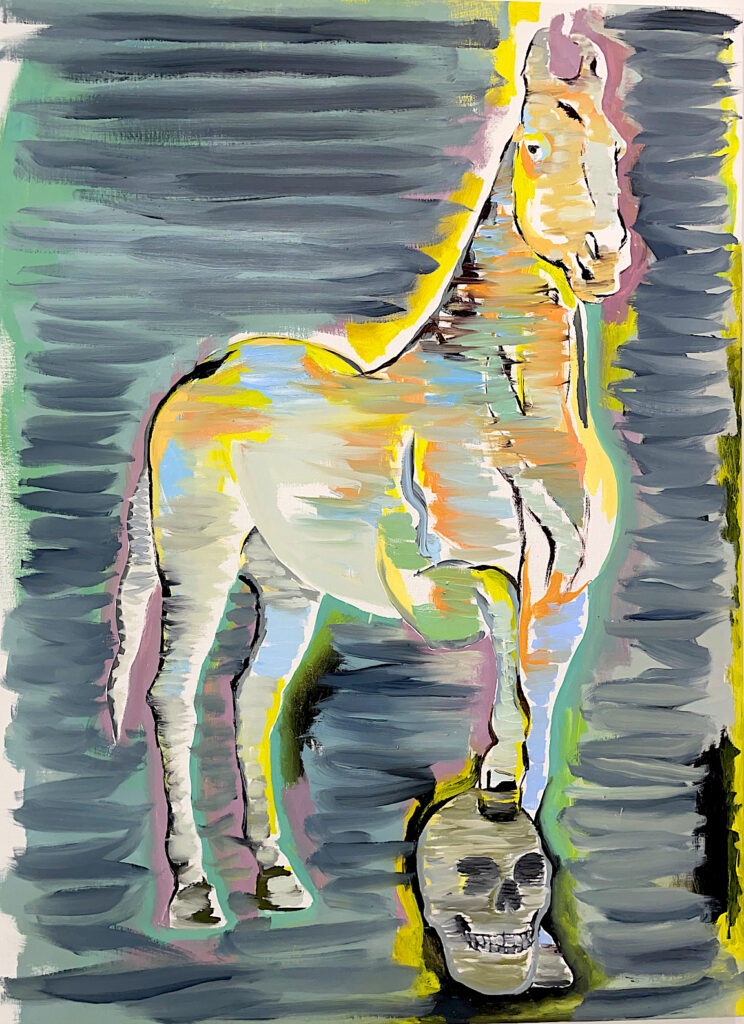
Ebenezer Singh, Bucephalus 66" X 48", oil on linen
Rosebud Contemporary is proud to present Horseplay, an exhibition of paintings by Ebenezer Singh opening on October 12, 2023, at their Chelsea location: 526 W 26th St #606 New York, NY. This is the artists first solo show with the gallery. The Exhibition contains five new paintings from the artist showing the interplay of corporeal and conjectural play of horses as his self-images.
Horseplay: the word indicates rude, rowdy, or inappropriate play. The artist engages himself in the mischief inherent in this term, flouting audience expectation and anchoring us to his imagery. He announces a certain irreverence for boundary, for orthodoxy. The artist becomes a winking deity, taking on known challenges and relying on the imaginative to generate a metaphysical, moral reality. Singh’s horse is the intuitive, sensitive messenger that translates his image-ideas from the metaphysical world to ours. Bold lines, subtle tones and paint-heavy brushstrokes carve out the physical lineaments of these animals – a bridle, a leg, a hand cue, all exist at a delicious interface between the real and the fantastically unreal. The horse becomes his other half, his avatar, the Frou-Frou to his County Vronsky, the companion of the man whose death resembles the death of all he loves. Singh’s beasts thus play on his painterly desires, fancies, and fantasies. They then emerge, dappled and dense with story, onto his canvases.
The work ‘Bucephalus’, oil on linen, 66”X 48” has the reference to Alexander’s horse that stood with him in all his gallant battles from Greece to India. The skull under its lifted leg though it holds a psychological sensory nature to it, it poetically implies the might of myth and heroic tales. With his unique and cathartic rendering style, Singh layers and builds his canvas space with broad brush strokes only to leave out breathing spaces for the previously laid colors.
‘Horse Girl’ is a poetic take on Virginia Wolf’s quote “I believe we must have the sort of power over you that we’re said to have over horses”. The intellectual facility that the women have over men in the gender war of the world captivates the artist to whimsically combine the horse and a woman. From the bright yellow background, the horse girl looks at the viewer both quizzically and confidently with the cerebral prowess.
Remembrance of Things Past
July 13 - September 28
GRAHAM GILLMORE
STAN NARTEN
EBENEZER SINGH
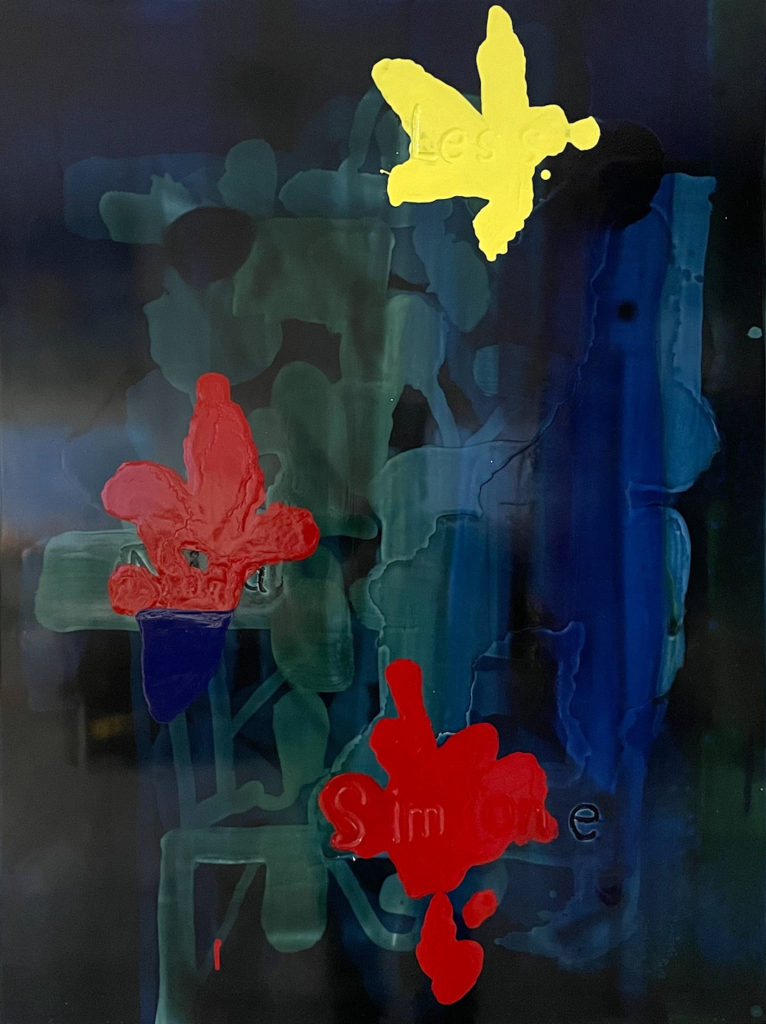
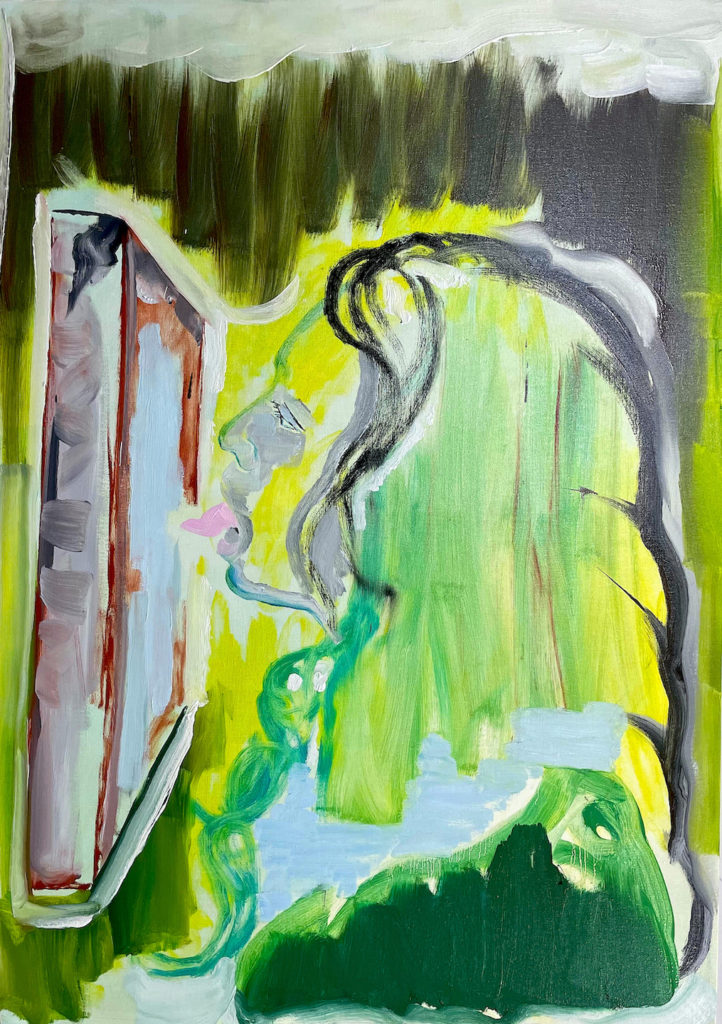
Ebenezer Singh, Lick, 54"X38", oil on linen
Rosebud Contemporary is proud to present its inaugural summer exhibition ‘Remembrance of Things Past: Graham Gillmore, Stan Narten, Ebenezer Singh’ from July 13th until August 17th at their Chelsea location: 526 W 26th St #606 New York, NY 10001. Our opening reception will be held from 6 pm to 8 pm. The exhibition contains three new paintings from each of our artists. Every work reverberates with this theme: remembering pushes us forward. French author Marcel Proust got it right with the title of his most famous work: human nature is a study in ‘remembrance of things past’. Consider the stucco-grey American flags of Jasper Johns, or Cimabue’s golden crucifix hanging from a Florentine church nave. Art reveals that the symbols we traffic in depend on our collective memory of history. Our everyday structures, even the buildings holding us up and the flags fluttering outside our homes, are a result of collective memory. War blooms across the world in terrific variety. Battlefields look only slightly different. The Sonoran Desert at the US-Mexico border. Grimdark-grey fallout shelters in Odesa, Mariupol, Kyiv. The entire Mediterranean Sea. A planet’s past is being remembered, with untenable violence and displacement.
Everything in the past is always waiting, waiting to detonate, said architectural historian Vincent Scully. For these artists, the past detonates daily on their canvases, as it does outside their studio windows. We exorcise history every day by keeping things from the past, by remembering. Rosebud Contemporary’s exhibition ‘Remembrance of Things Past’ contains a body of work that reverberates with this theme. The artist’s lived experiences transfigure their canvas as an irrepressible ‘anima’. This anima is a proxy for Proust’s madeleine, in its ability to recall childhood memory through the inchoate prisms of adult post-modern experience. Everyone has a madeleine, that plain French biscuit that involuntarily summons a host of powerful childhood memories for Proust in ‘Remembrance of Things Past’. For Gillmore, the past is exorcised through the terse elegance of word-as-image. For Narten, there is a droll disillusionment in the motley memories of his urban life, even as potential light sources dance everywhere. For Singh, his anima occupies the female spirits of his life, those potent madeleines that conjure up memories of nature, sensuality and the supernatural. For all three artists, their present canvases tumble through memory and ford streams of remembrance. What we as viewers are left with, are gorgeous palimpsests of their collective past.